

A maintenance calendar that treats every asset the same can leave critical equipment exposed to failure. Developing a preventative maintenance plan for water systems means accounting for each asset’s role, condition, and operating demands, rather than assigning the same service interval across the board. If pumps, filters, treatment components, and controls aren’t maintained consistently, unplanned downtime can disrupt water supply or production.
Start by identifying what could fail and what the consequences would be. Each task needs a clear procedure, owner, trigger or interval, and record of what was inspected, adjusted, or repaired. This article explains how to organize maintenance around asset criticality and operating conditions, using equipment manuals, site conditions, and applicable requirements to set intervals. It also shows how to use inspection findings and operating data to spot recurring issues and improve the plan over time.
Key Takeaways
- Start with a complete asset inventory and operating context, then rank equipment by the consequences of failure and the time and effort needed to recover.
- Choose time-based, condition-based, or run-to-failure maintenance according to each asset’s criticality, failure mode, monitoring capability, and service conditions.
- When developing a preventative maintenance plan for water systems, define a trigger or interval, responsible role, procedure reference, and completion evidence for every task.
- Use completion rates, repeat failures, downtime, operating trends, and open corrective work to identify where the plan needs adjustment.
- Review priorities when equipment, process conditions, operating goals, or documented risks change, and keep maintenance intervals aligned with manuals and site requirements.
Why a Water System Needs a Preventative Maintenance Plan
Preventative maintenance is planned inspection and servicing intended to keep equipment operating and catch developing faults before they cause disruption. Reactive repairs begin after a fault occurs. The operational difference can be significant: a failed feed pump may interrupt treatment, while a fouled filter or membrane can reduce process performance and add strain to connected equipment. Emergency work can also require unplanned labor, parts, and process adjustments.
In industrial terms, preventative maintenance is work scheduled or triggered by equipment condition to reduce avoidable failures and keep a water process ready to operate. A plan makes that work consistent and traceable. Its scope depends on the system’s purpose, process conditions, equipment configuration, and site requirements. A treatment plant serving production has different operating priorities from a system designed for another end use, so a generic calendar is rarely sufficient.
Which water-system assets belong in the plan?
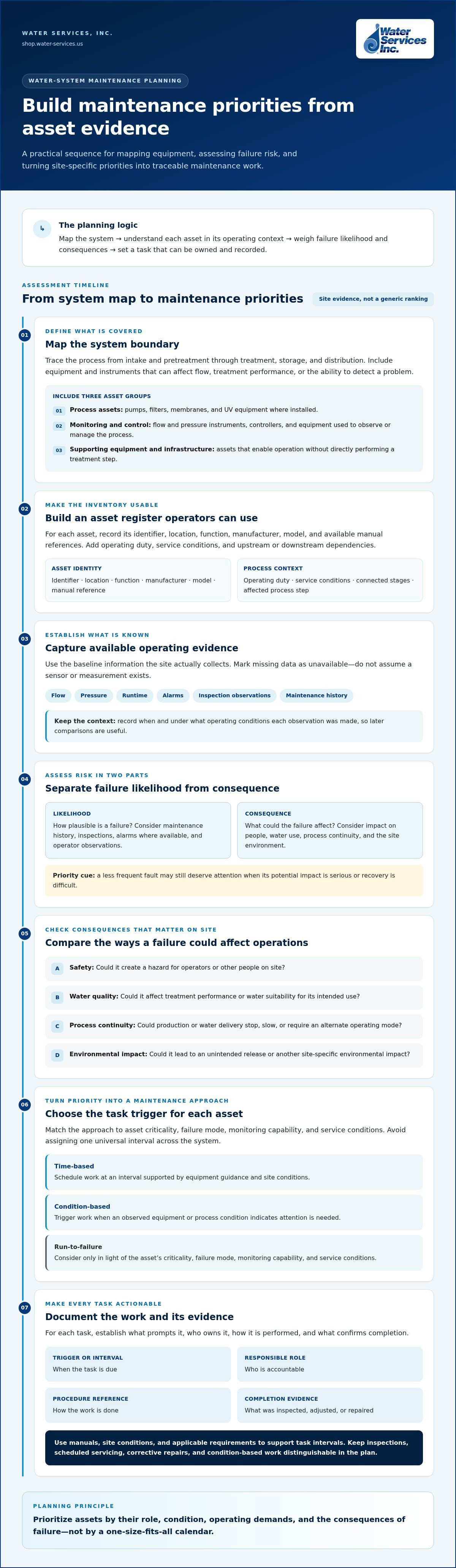
Map the process from intake and pretreatment through treatment, storage, and distribution. Include equipment and instruments that can affect flow, treatment performance, or the ability to detect a problem. For example, planned filter backwashing can be part of filter upkeep; Backwashing in water treatment describes the process.
- Process assets: pumps, filters, membranes, and UV equipment, where installed.
- Monitoring and control assets: flow and pressure instruments, controllers, and other equipment used to observe or manage the process.
- Supporting equipment and infrastructure: assets that enable operation but don’t directly perform a treatment step.
Separate critical process assets from supporting equipment. This helps teams focus planning effort on assets whose failure could interrupt treatment or make process conditions harder to assess.
What a useful maintenance plan should establish
A practical plan defines its boundaries and how work will be managed. Record the assets covered, maintenance objectives, accountable roles, and the system used to document work. Distinguish routine inspections, scheduled servicing, corrective repairs, and condition-based tasks so operators can tell what action is due and how to record the result.
- Routine inspections look for observable changes or faults during planned checks.
- Scheduled servicing follows a defined procedure and an interval supported by equipment guidance and site conditions.
- Corrective work addresses a fault found during operation or inspection.
- Condition-based tasks are triggered by an observed equipment or process condition.
Don’t assign universal intervals before assessing the equipment and its operating environment. Developing a preventative maintenance plan for water systems starts with understanding what is installed and how it is used. Set each task and interval using the relevant equipment manual, site conditions, and applicable requirements. With that foundation, you can identify which assets and failure consequences deserve priority.
How to Assess Water-System Assets and Set Maintenance Priorities
Once the system boundary is clear, assess assets in a consistent sequence: build the register, capture operating context, evaluate failure likelihood and consequences, then document priorities. This turns an equipment list into a risk-based view of what could interrupt the process and where planning needs attention first. Developing a preventative maintenance plan for water systems requires site evidence, not a generic ranking applied to every facility.
Build an asset register that operators can use
Make the register practical at the point of work. For each asset, capture its identifier, location, function, manufacturer, model, and available manual references. Add operating duty and service conditions, plus upstream and downstream dependencies. For example, note which treatment stage relies on a particular pump and which process step may be affected if it becomes unavailable. Where relevant, connect assets with the industrial pump equipment serving them.
Record baseline information the site actually collects. Depending on installed instruments and operating routines, this may include flow, pressure, runtime, alarms, inspection observations, or maintenance history. Mark missing data as unavailable rather than assuming a sensor or measurement exists. Record when and under what operating conditions each observation was made, so future comparisons have useful context.
Rank failure risk using site-specific consequences
Assess likelihood and consequence separately. Use maintenance history, inspections, alarms where available, and operator observations to judge how plausible a failure is. Then consider what it could affect. Even a less frequent fault may deserve priority if recovery is difficult or the potential impact is serious.
- Safety: Could failure create a hazard for operators or other people on site?
- Water quality: Could it affect treatment performance or the water’s suitability for its intended use?
- Process continuity: Would production or water delivery stop, slow, or require an alternate operating mode?
- Environmental impact: Could a failure lead to an unintended release or another site-specific environmental consequence?
- Recovery time: How long might it take to diagnose the fault, obtain parts, restore operation, and verify performance?
The greater an asset’s failure consequences and recovery burden, the higher its maintenance priority should be. Use a site-defined ranking, such as priority bands with written criteria, rather than implying a universal numerical threshold. Document the evidence and assumptions behind each rating. Review ratings when equipment, process conditions, operating goals, or known risks change.
Keep rankings connected to operating evidence. The Water Environment Federation discusses using performance measures to inform planning in Optimizing preventative maintenance schedules in water treatment. Teams can use a similar approach to examine whether priority decisions reflect observed performance, while keeping criteria specific to the facility.
Choosing Maintenance Tasks: Time-Based, Condition-Based, or Run-to-Failure
Maintenance strategy should fit the asset, not follow a single rule across the plant. Choose an approach by considering the asset’s criticality, likely failure mode, available monitoring, and service conditions. A pump exposed to variable duty may need a different task strategy from a low-consequence component that’s easy to replace. The aim is to make every task purposeful and actionable.
Time-based: Perform a defined task at an interval supported by equipment guidance or site operating experience. This suits servicing needs tied to elapsed time or use, but unnecessary work can result if the interval doesn’t fit actual conditions.
Condition-based: Inspect or monitor for a defined indication of change, then act when the finding warrants it. This can focus work on equipment showing a developing issue, provided readings or observations are available and reviewed consistently.
Run-to-failure: Allow an asset to operate until failure, then repair or replace it. Consider this only when the failure consequence is acceptable, recovery is manageable, and failure won’t compromise safety, water quality, or critical process continuity.
These strategies can coexist. A site might schedule inspections for a treatment component, monitor available operating trends for a pump, and reserve run-to-failure for a non-critical supporting asset. The choice should reflect the process and its risks, not convenience alone. The water treatment equipment in each system varies, so task selection must account for installed equipment and its role.
When scheduled maintenance is appropriate
Use scheduled tasks when equipment manuals or documented operating experience support a defined service interval. Record the procedure and the basis for its timing. Review the interval against actual duty and site conditions; don’t treat a generic calendar frequency as a universal engineering requirement. If service conditions change, reassess whether the task and timing still fit.
When condition-based maintenance adds value
Use trends the site can reliably observe, such as pressure, flow, runtime, alarms where available, or visible equipment condition. Assign someone to review each reading and specify what happens when it changes: record the finding, assess its significance, and initiate an inspection or corrective work order as appropriate. Control-related tasks may involve electrical power controls where installed.
Keep observation separate from intervention. An inspection records a condition; it doesn’t automatically mean equipment needs adjustment or repair. Define how findings become work orders, including the asset identifier, observation, date, assigned owner, priority, and required follow-up. This creates a traceable path from a changing reading to a decision and completed action.
When developing a preventative maintenance plan for water systems, don’t collect monitoring data without defining a response. A trend is useful only if someone reviews it against the asset’s baseline and knows how to escalate an abnormal finding. That link helps keep tasks practical and the maintenance schedule responsive to actual system behavior.
How to Turn Priorities into a Workable Maintenance Schedule
A priority ranking only helps operations when it becomes assigned work. Convert each approved task into a schedule entry or work order that tells the operator what to do, when it’s due, how to perform it, and what evidence to record. This is where developing a preventative maintenance plan for water systems becomes a repeatable workflow rather than a list of intentions.
- Define the task and trigger. State the inspection or service required, then specify its interval or condition-based trigger. Reference equipment documentation and site review for timing.
- Assign accountable ownership. Name the responsible role, any required skills, and who reviews or approves completed work. Don’t assign a task to a team without identifying who closes it.
- Link the procedure. Include the applicable manual, site procedure, permit requirements, and safety instructions. Identify the tools, parts, and preparation needed before work begins.
- Coordinate the work window. Check process dependencies, access constraints, and operational availability. Schedule around required shutdowns or alternate operating arrangements, and coordinate permits and site safety procedures before the task starts.
- Specify completion evidence. Define what the technician or operator records, such as readings, observations, actions taken, and defects requiring follow-up.
Set task ownership, timing, and work-order details
Work orders should be usable in the field. Include the asset ID and location, task description, trigger or due date, responsible role, procedure reference, required skills and tools, and completion evidence. Sequence interdependent work so one task doesn’t unexpectedly disrupt an upstream or downstream process. Include site-specific preparation, such as selecting appropriate personal protective equipment for the task and work area.
A workable schedule also accounts for operating windows. Coordinate planned access with operations staff, especially when equipment must be isolated or a process step temporarily taken out of service. Identify required permits and safety controls without replacing the site’s established procedures. If work can’t proceed as planned, record the reason, revised timing, and any interim action assigned.
Document inspections and close the maintenance loop
Use one consistent record format, whether in a computerized system or a controlled log. Capture the date, asset ID, readings or observations, work performed, person completing the task, and unresolved defects. Record findings even when no corrective work is needed; that history helps distinguish a normal condition from a developing change.
Close the work order only after field completion is verified. If the task reveals a defect, create a linked corrective action with an owner, priority, and follow-up status. Track overdue tasks and open corrective work so they remain visible to the responsible team. Findings that could affect safety, water quality, or system availability should follow defined escalation steps, including prompt notification to the designated site authority. Records support decisions, but don’t replace field inspection or verification.
For equipment and work-planning needs, explore water system equipment that supports your maintenance program.
Keep the Plan Effective with Reviews, Parts, and Technical Support
A maintenance plan needs regular review to stay aligned with the system it serves. Examine completion rates, repeat failures, downtime, operating trends, and unresolved corrective work together. A high task completion rate doesn’t prove the tasks are effective if the same defect keeps returning. Look for patterns, check whether planned work addresses observed failure modes, and assign follow-up when the evidence points to a gap.
Use maintenance records to improve the next plan revision
Compare inspection findings with the assumptions behind each task. If defects recur despite completed maintenance, consider whether the procedure, trigger, task ownership, or maintenance strategy needs revision. If conditions remain stable, records can help determine whether a task is still appropriate. Use operating data as context, not as a substitute for qualified review.
Completed work and operating data turn maintenance history into evidence for better decisions in the next plan revision. Record each material change, the reason for it, who approved it, and its effective date. Update affected procedures and work orders so operators use the current version. Revisit the plan when equipment changes, process conditions shift, operating goals are revised, or documented risks change.
Connect maintenance needs with equipment and support
Parts planning is part of readiness. Identify components that may be needed for scheduled work or recurring corrective tasks, and record the asset requirements used to select them. Match replacements to documented equipment and operating conditions. Compatibility matters: a component selected without regard to the installed system may not meet the process need. Keep relevant part details and references with the asset record so they’re available during planning and repair.
System design also informs maintenance scope. Configuration, process stages, and operating purpose shape which assets need attention and how teams organize their work. The industrial water treatment systems guide provides context on system design that can help frame those decisions. Water Services, Inc. supports industrial water systems with equipment, custom modular systems, technical support, and ongoing operational maintenance. This support can complement a site’s maintenance program while keeping tasks and priorities specific to its equipment.
As you develop a preventative maintenance plan for water systems, treat review as part of normal operations, not a one-time planning exercise. Bring maintenance records and operating observations into each review, then document decisions and follow-up actions. This feedback loop helps keep the schedule relevant as the system and its needs evolve.
Discuss your water-system maintenance needs with Water Services, Inc. to explore equipment, system design, or maintenance support for your operation.
Make Your Maintenance Plan a Working Tool
Put the plan into practice on a defined part of the system. Choose an asset group, assign the first tasks, and observe how operators use the procedures and records during real work. This can reveal practical gaps, such as unclear ownership or evidence that’s difficult to capture, before the same issues affect broader implementation.
Keep the plan active by treating completed tasks and unresolved findings as input for the next review. As your team refines its process, align equipment decisions and technical support with the operating needs documented in the plan. Water Services, Inc. supplies industrial water equipment and provides engineering and maintenance support to help organizations address system requirements.
To align equipment and support with your maintenance priorities, discuss your water-system maintenance and equipment needs. Developing a preventative maintenance plan for water systems is an ongoing operational effort. Start with the priorities that matter most to your operation.
Frequently Asked Questions
How often should industrial water treatment equipment be maintained?
Set maintenance frequency using the equipment manufacturer’s guidance, operating duty, water conditions, maintenance history, and site risk. A pump handling variable demand or water with changing characteristics may need a different inspection approach from a component operating under stable conditions. Review intervals against actual findings and documented requirements. Don’t apply one calendar frequency to every asset, and revise the schedule when operating evidence shows the original timing no longer fits.
What should a preventative maintenance plan for a water system include?
A useful plan identifies the equipment in scope, why it needs maintenance, and how each task is initiated and completed. Include asset priorities, task triggers or intervals, accountable roles, procedure references, and the records operators must retain. For example, specify how to document a filter inspection and route a defect for follow-up. Also name who reviews performance and approves changes, so the plan remains controlled as the process evolves.
Can condition-based maintenance replace scheduled maintenance?
Not automatically. Condition-based work responds to evidence such as a changing reading or an inspection finding, while scheduled tasks follow an established interval or procedure. Monitoring can help direct attention to developing issues, but it doesn’t remove a scheduled task required by equipment guidance or site requirements. For example, a pressure trend might trigger an inspection between planned service events, while the scheduled service remains on the work calendar.
How do you prioritize water-system equipment for maintenance?
Consider both how likely an asset is to fail and what the site would experience if it did. Assess potential effects on operator safety, treatment performance, water quality, production continuity, and environmental conditions. Include recovery time: a fault may be difficult to address if diagnosis, parts, or process restoration take considerable effort. Compare the asset’s role with available history and inspection evidence, then document why its priority is higher or lower than related equipment.
What maintenance records should water-system operators keep?
Keep records that let another operator understand what happened and what remains to be done. Include the asset identifier, date, relevant readings or observations, work completed, and the person or role responsible. Note defects that weren’t resolved during the task, the linked follow-up action, and its status. Preserve revision history for changes to procedures or task timing, including the reason for each update, so records support field decisions and later plan reviews.
What happens if a water-treatment asset repeatedly fails inspections?
Document each finding and assess whether the condition creates an immediate risk to safety, water quality, or system availability. Follow site escalation procedures if the risk needs prompt attention. Assign corrective work with an owner and track it through completion. Then review whether the inspection method is detecting the issue early enough, whether the task remains suitable, and whether the equipment or operating conditions need further assessment.
Does every water system need the same preventative maintenance schedule?
No. A schedule should reflect the system’s treatment process, installed equipment, operating duty, source-water conditions, intended use, and applicable site requirements. A system with membranes and UV treatment has different maintenance considerations from one with another process configuration. Even similar equipment may operate under different loads or water conditions. Build intervals and tasks around the actual installation, then review them when the process or operating context changes.
0 comments