

Building massive, permanent concrete infrastructure is no longer the most dependable way to handle mining effluent. Operating in remote field conditions means facing a relentless operational challenge: strict environmental discharge permits paired with aggressive water chemistry that corrodes standard pumping and piping assets. Achieving reliable heavy metal removal from mine water doesn't require complex civil works that take years to build and create massive capital burdens. You know firsthand how acidic drainage and fluctuating dissolved solids trigger chronic equipment failure, resulting in unnecessary downtime when discharge permits leave zero margin for error.
This 2026 industrial engineering guide details how to engineer high-efficiency heavy metal removal systems using advanced membrane separation and targeted chemical treatment technologies. We walk through the multi-stage system designs, pretreatment chemistries, and modular configurations needed to protect downstream ecosystems and maintain continuous regulatory compliance without excessive maintenance overhead.
Key Takeaways
- Understand how current environmental discharge standards and zero-liquid discharge targets make advanced heavy metal removal from mine water essential for avoiding operational shutdowns.
- Compare reverse osmosis membrane separation against traditional chemical precipitation to minimize hazardous sludge production and optimize dissolved metal recovery.
- Configure an end-to-end industrial treatment train combining multimedia pre-filtration, ultrafiltration, and high-pressure pumping for consistent hydraulic delivery.
- Prevent costly membrane scaling from calcium sulfate and silica through targeted chemical dosing regimens and real-time monitoring.
- Explore how modular, containerized treatment plants slash on-site engineering lead times and provide rapid, reliable deployment in remote extraction environments.
The Critical Necessity of Heavy Metal Removal in Mining Operations
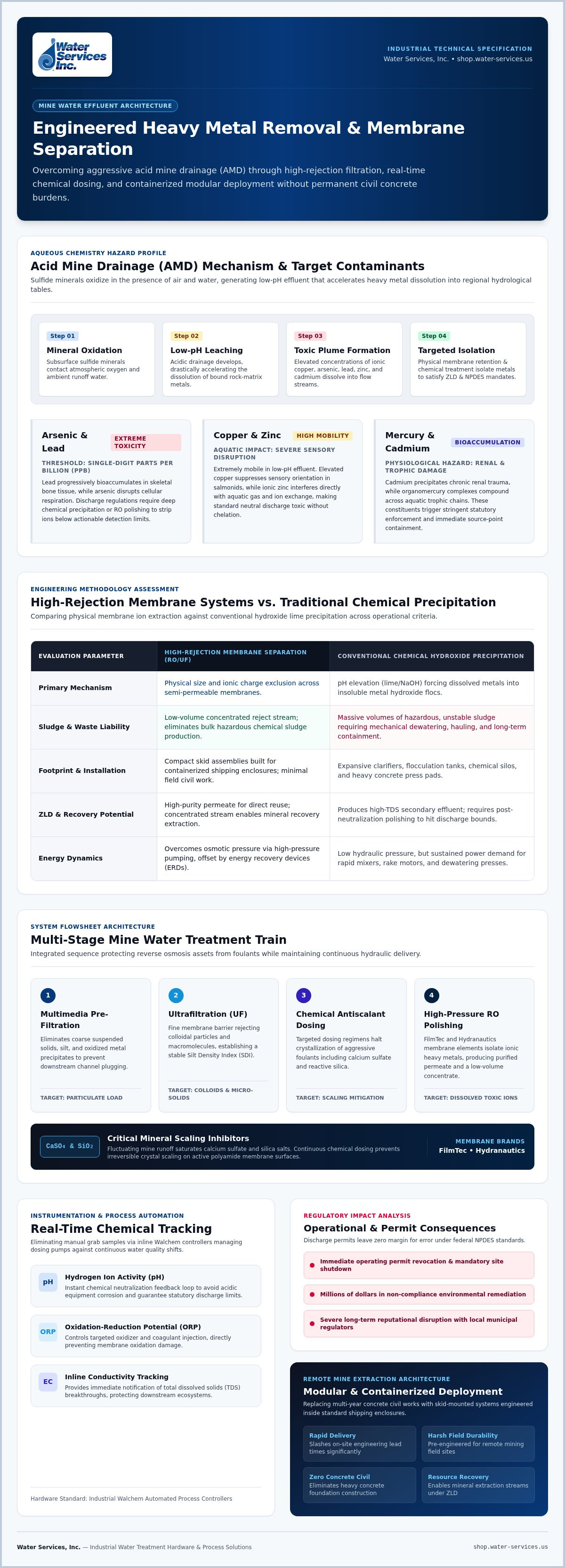
Mining operations face severe water handling challenges. Effective heavy metal removal from mine water centers on isolating and extracting dissolved toxic ions, primarily lead, arsenic, cadmium, and copper, from process streams and tailings drainage. When sulfide minerals oxidize in the presence of air and water, they form Acid Mine Drainage (AMD). This low-pH effluent accelerates the dissolution of surrounding heavy metals, creating a corrosive cocktail that can rapidly contaminate local groundwater tables if left untreated. Today's environmental directives push operators toward zero-liquid discharge (ZLD) frameworks, transforming wastewater handling from a secondary task into a core production process. Modern treatment trains also enable valuable mineral extraction, turning costly compliance processes into potential resource recovery streams.
Common Heavy Metal Contaminants in Mine Discharge
Each mineral extraction profile creates distinct aqueous hazards that dictate your treatment architecture:
- Arsenic and Lead: These elements present extreme toxicity risks. Regulatory authorities enforce discharge limits often measured in single-digit parts per billion. Lead accumulates in bone matter, while arsenic disrupts cellular respiration, requiring deep chemical precipitation or reverse osmosis polishing to strip them below actionable detection limits.
- Copper and Zinc: Highly mobile in low-pH drainage, these metals directly impact aquatic life. Elevated copper levels inhibit salmonid sensory functions, while zinc disrupts aquatic gas and ion exchange, making standard neutral discharge toxic without targeted chelation.
- Mercury and Cadmium: Both metals present persistent bioaccumulation hazards. Cadmium damages renal systems, while organic mercury compounds biomagnify up aquatic food chains, triggering immediate, stringent environmental interventions at the source.
Regulatory Compliance and Discharge Permits
Meeting National Pollutant Discharge Elimination System (NPDES) permits and local discharge limits requires continuous, verifiable control. Compliance cannot rely on manual grab samples; it demands automated, real-time chemical tracking. Installing industrial Walchem controllers provides reliable, continuous measurement of effluent pH, oxidation-reduction potential (ORP), and conductivity. These controllers manage chemical dosing pumps instantly as influent quality changes, keeping effluent parameters strictly within statutory bounds.
Operating outside permitted thresholds brings severe consequences. Regulators can issue substantial monetary penalties, revoke operating permits, or mandate immediate site shutdowns. A single uncontrolled discharge event can lead to millions of dollars in remediation expenses and permanent reputational damage with local communities. Integrating reliable monitoring hardware directly with your separation infrastructure is the only viable path for uninterrupted heavy metal removal from mine water.
Membrane-Based Filtration vs. Chemical Precipitation for Mine Water
Selecting the correct separation mechanism determines both your operating budget and permit stability. Traditional chemical dosing relies on raising effluent pH using lime or sodium hydroxide to precipitate metals as insoluble hydroxides. While straightforward, this method generates immense quantities of unstable, hazardous sludge. Dewatering, hauling, and storing this material creates perpetual environmental liability and inflated operating costs. Membrane-based separation physically isolates dissolved metal ions, producing clean permeate and a low-volume concentrate stream without adding bulk chemical solids.
Footprint and power demands also divide these strategies. Clarifiers, flocculation tanks, and filter presses demand substantial civil foundations. In contrast, high-recovery membrane trains utilize compact, skid-mounted footprints that easily fit inside standardized shipping containers. This modular setup slashes field assembly time. Membrane systems do demand high feed pressures to overcome osmotic resistance, but modern energy recovery devices and high-efficiency drives significantly reduce net kilowatt-hour consumption per cubic meter treated.
High-Rejection Membrane Technologies
Modern plants deploy high-rejection FilmTec and Hydranautics RO membranes to strip more than 99% of dissolved ionic species from feed streams. Because raw mine drainage quickly fouls delicate composite polyamide surfaces, upstream protection is mandatory. Skid-mounted hollow-fiber ultrafiltration (UF) modules remove suspended solids, colloidal iron, and silt, keeping the Silt Density Index (SDI) safely below 3.0. The primary RO system then consistently rejects polyvalent ions, generating high-purity permeate for site reuse or compliant environmental discharge. Meanwhile, the concentrated reject stream can be routed to selective crystallizers or recovery circuits.
Chemical Precipitation and Ion Exchange
Reagent addition remains useful for bulk metal reduction before downstream polishing. Elevating pH induces precipitation: copper precipitates efficiently near pH 8.0, whereas zinc and nickel require alkaline conditions above pH 9.5. For operations with specific discharge targets, chelating ion exchange resins capture remaining trace elements. However, chemical precipitation alone struggles with high-flow, highly variable influent. Sudden drops in pH or spikes in dissolved sulfate disrupt floc formation, carrying dangerous heavy metal carryover downstream. Operators managing complex feed streams often upgrade their lines with high-grade separation components from Water Services, Inc. to combine bulk chemical reduction with reliable membrane barrier systems for guaranteed compliance.
Engineering a Robust Mine Water Treatment Train
Field-proven heavy metal removal from mine water requires a structured multi-stage treatment flow: coarse pre-filtration, followed by ultrafiltration, and finishing with high-pressure reverse osmosis. Mine discharge contains erratic concentrations of suspended solids and abrasive fines that will ruin delicate RO elements within hours if introduced directly. Passing the feed stream through multimedia filter tanks loaded with graded gravel, garnet, and anthracite strips out bulk turbidity. This initial step lowers total suspended solids (TSS) so the downstream hollow-fiber ultrafiltration stage can focus entirely on fine colloidal particles. Inline Ashcroft pressure gauges positioned before and after each filtration skid deliver instantaneous differential pressure readings, alerting technicians to head loss spikes before hydraulic shocks compromise membrane vessels.
Primary Pumping and Intake Systems
Maintaining hydrodynamic stability across this multi-barrier train hinges on mechanical reliability at the intake. Mining engineers rely heavily on industrial Goulds Water Technology Pumps to drive raw pit water through primary treatment stages. Corrosive acid mine drainage demands 316 stainless steel or duplex alloy wet ends to resist pitting and cavitation. Sizing centrifugal pumps to supply consistent, pulse-free GPM flow rates prevents flux variations that destabilize upstream chemistry or trigger low-pressure faults on high-pressure booster units.
Filtration Housings and Media
Protecting the secondary stages requires rugged equipment engineered to hold up under severe operating pressures. Heavy-duty Pentair and Harmsco filter housings deliver durable containment for intermediate polishers, trapping fine metal flocs and broken media grains that escape primary settling basins. System designs typically incorporate staged micron ratings to extend component longevity:
- Multimedia Media Beds: Capture bulk particulate matter down to 15 to 20 microns, handling high inlet turbidity from open-pit runoff.
- 10-to-20 Micron Cartridges: Function as sacrificial pre-filters inside stainless steel multi-round vessels, shielding backwashable UF systems from sharp, abrasive particles.
- 1-to-5 Micron Replacement Sediment Filters: Positioned immediately upstream of reverse osmosis elements to block residual silt and protect high-rejection composite layers.
- Selective Carbon Filtration: Deployed strategically when process streams carry residual organic flotation reagents that degrade thin-film membranes.
This deliberate, stepped separation train maintains peak operational uptime, protecting capital-intensive membrane elements while ensuring continuous compliance in heavy metal removal from mine water.
Operational Challenges: Fouling, Scaling, and Maintenance
Mineral-heavy process streams subject separation equipment to extreme chemical fouling. When handling heavy metal removal from mine water, the primary scalants fouling spiral-wound elements are calcium sulfate (gypsum), reactive silica, and oxidized iron. Calcium sulfate precipitates rapidly as recovery rates climb, forming hard crystal sheets that abrade polymer membranes. Dissolved silica polymerizes into an impermeable glass-like matrix that resists standard hydraulic flushing. Meanwhile, dissolved ferrous iron oxidizes into insoluble ferric hydroxide flocs that physically blind feed spacers, causing severe differential pressure spikes.
Periodic Clean-in-Place (CIP) cycles restore operational baseline parameters when flux declines by 10 to 15 percent. Low-pH acid cleanings strip precipitated metal oxides and carbonate scaling, while high-pH alkaline washes dislodge organic residues and colloidal silicates. Handling these concentrated acid and caustic CIP washes requires certified Personal Protective Equipment (PPE), including chemical-resistant suits, heavy-duty face shields, and nitrile gloves, to protect plant operators during chemical batching and line purges.
Antiscalant and Chemical Dosing
Preventing scale formation upstream is far more cost-effective than frequent membrane cleanings. Precision dosing using Pulsafeeder metering pumps introduces threshold scale inhibitors directly into the reverse osmosis feed manifold. These specialized water treatment antiscalants distort crystal growth lattices and disperse colloidal minerals, keeping gypsum and silica soluble at supersaturated levels. Pairing these pumps with inline Signet flow sensors ensures dosing rates automatically track fluctuating pit inflows, extending membrane life and reducing the plant's total cost of consumables.
Routine Maintenance and Component Replacement
Proactive maintenance scheduling avoids unplanned process shutdowns in remote locations. Treatment skids need structured inspection cycles to verify hydraulic performance:
- Bi-weekly Differential Audits: Track Ashcroft pressure gauges across cartridge housings; a 10 to 15 psi drop signals an immediate need for replacement sediment and carbon filters.
- Normalized Flux Tracking: Document daily permeate flow rates to catch mineral scaling before permanent membrane compaction occurs.
- Strategic Consumables Logistics: Maintain critical spares onsite, including replacement O-rings, spare pump seals, and extra membrane elements, to offset multi-week supply chain delays common to remote extraction sites.
Optimize your treatment uptime by sourcing replacement components and field-ready consumables through Water Services, Inc. to safeguard your treatment infrastructure against scale-induced downtime.
Modular and Mobile Solutions for Remote Mine Sites
Operating in high-altitude terrain or isolated mineral basins severely complicates water treatment logistics. Traditional stick-built civil infrastructure requires lengthy concrete curing cycles, complex contractor mobilization, and vulnerable supply chains. Engineered containerized reverse osmosis plants solve this hurdle by housing all primary pumping, filtration skids, and automated chemical metering within standardized ISO shipping containers. These pre-plumbed, pre-wired skids operate on a "plug-and-play" basis, reducing on-site installation work to external utility tie-ins and influent pipe routing. As open-pit operations expand or mine dewatering rates climb, operators scale treatment throughput simply by positioning secondary containerized units in parallel.
Containerized vs. Stick-Built Infrastructure
Factory-assembled modular units eliminate the execution risks inherent to remote construction sites. Treatment skids undergo complete hydrostatic pressure tests, electrical loop checks, and factory acceptance testing before shipping to the field, guaranteeing out-of-the-box compliance with environmental permits. Once mining phases finish, containerized skids disconnect quickly for transport to new extraction pits. This mobility eliminates stranded civil assets and drastically reduces environmental reclamation liabilities during mine closure phases.
Rental and Leasing for Mining Water Management
Precipitation spikes, spring snowmelt, and unpredicted acidic surges create temporary hydraulic loads that exceed base plant capacity. Deploying mobile water treatment plant rentals provides rapid emergency capacity without requiring heavy capital asset expenditure. Rental units offer an efficient path for short-term operational needs:
- Seasonal Mine Drainage Surges: Absorb wet-weather runoff spikes without overbuilding permanent onsite treatment capacity.
- Pre-Feasibility Pilot Testing: Validate membrane flux, fouling factors, and metal rejection metrics on actual site water prior to finalizing commercial facility designs.
- Capital Preservation: Treat water under operating expenditure budgets, freeing up essential capital reserves for core drilling, extraction, and crushing assets.
- Comprehensive Field Support: Secure rental contracts that integrate technical troubleshooting and proactive component supply to manage remote operating risks.
Modular architectures deliver the physical flexibility necessary to achieve uninterrupted heavy metal removal from mine water regardless of geographic remoteness or fluctuating operational lifespans.
Building Long-Term Mine Water Treatment Reliability
Engineering high-efficiency heavy metal removal from mine water requires balancing robust physical separation with disciplined chemical control. Staging multimedia pre-filtration and ultrafiltration ahead of high-rejection reverse osmosis membranes eliminates hazardous discharge risks while avoiding the unmanageable sludge volumes of traditional precipitation pits. Meanwhile, factory-built modular skids remove the logistical headaches of remote civil construction, enabling operations to deploy fast and scale hydraulic capacity as pit dewatering demands rise.
Since 1994, Water Services, Inc. has engineered containerized reverse osmosis and ultrafiltration plants built to withstand aggressive mineral chemistry, supported by global installations across Africa and the Middle East. Whether your site requires complete mobile systems or proven components as an authorized distributor of Goulds pumps, FilmTec membranes, and Viqua purification units, our team delivers the mechanical reliability required for remote industrial duty.
Consult with Water Services, Inc. for Custom Mining Water Solutions to safeguard your site permits and optimize your mine water infrastructure today.
Frequently Asked Questions
What is the most effective method for heavy metal removal from mine water?
The most effective method for heavy metal removal from mine water combines physical membrane separation with targeted chemical pre-treatment. While chemical dosing removes bulk metals at specific pH levels, high-rejection reverse osmosis membranes isolate over 99% of dissolved ionic species, including arsenic, cadmium, and lead. Pairing ultrafiltration upstream strips colloidal matter, creating an integrated treatment train that achieves discharge compliance without generating unmanageable volumes of hazardous chemical sludge.
How do RO membranes handle the high acidity of mine drainage?
Standard composite polyamide reverse osmosis membranes cannot operate in untreated, highly acidic mine drainage below pH 2.0 without suffering structural degradation. Water treatment trains neutralize acidic feed using caustic dosing controlled by automated Walchem monitors before entering membrane skids. Raising the pH to a stable operating range between 6.0 and 8.0 preserves membrane integrity, prevents polymer hydrolysis, and optimizes the rejection rates of targeted heavy metal ions during high-pressure separation.
Can heavy metals be recovered and sold from mine wastewater?
Yes, selective precipitation and membrane concentration allow operators to extract valuable commodities from wastewater streams. High concentrations of copper, nickel, and zinc can be selectively captured using staged pH adjustment, ion exchange resins, or membrane crystallizers. Concentrating these metals transforms hazardous runoff into marketable hydroxide cakes or high-grade concentrates, generating byproduct revenue that partially offsets the ongoing operational costs of your mine site's wastewater management infrastructure.
What is the difference between active and passive mine water treatment?
Active treatment utilizes mechanical power, continuous chemical dosing, and automated filtration hardware like pumps, ultrafiltration skids, and RO units to process high volumes rapidly with predictable results. Passive treatment relies on natural geochemical and biological processes, such as constructed wetlands and limestone drains, requiring minimal mechanical power. While passive options carry lower operational expenses, active systems remain mandatory for high-flow, high-toxicity mine sites requiring strict permit compliance.
How much does a containerized mine water treatment plant cost?
Total capital investment for a containerized plant depends entirely on engineering specifications, feed water chemistry, and volumetric flow requirements. Key factors influencing cost include required daily GPM throughput, metallurgical construction needed to resist acidic corrosion (such as 316 stainless steel or duplex alloys), upstream pre-filtration staging, and automated instrumentation packages like Walchem controllers. Consulting with an industrial water engineer provides an accurate expenditure model based on your mine's specific water profile.
What are the 2026 EPA standards for heavy metals in mining discharge?
Federal mining discharge standards in the United States remain anchored by the EPA Effluent Limitation Guidelines under 40 CFR Part 440 for ore mining. These standards establish enforceable limits on metals such as lead, copper, zinc, and arsenic within NPDES permits. Because these federal baselines are decades old, regional authorities and local permits regularly enforce far stricter concentration limits, necessitating advanced membrane filtration to meet modern site-specific environmental discharge rules.
How often should RO membranes be replaced in a mining environment?
RO membranes in aggressive mining applications typically last between two and four years when supported by proper maintenance. Membrane lifespan depends on feed water pre-treatment, upstream ultrafiltration efficiency, and the precision of antiscalant chemical dosing. Tracking normalized permeate flux and differential pressure via inline gauges alerts operators to scale accumulation early. Regular Clean-in-Place cycles clear mineral fouling, extending element longevity and preventing premature compaction caused by severe mineral scaling.
Is mobile water treatment rental better than buying a permanent system?
Renting mobile systems is often superior for short-term operations, seasonal drainage spikes, and pilot testing before committing to large capital projects. Modular rentals preserve capital for core extraction assets while providing immediate compliance capability for heavy metal removal from mine water. Conversely, permanent purchase proves more economical over multi-year mining operations with steady dewatering flow rates, giving mining companies full asset ownership and long-term operating cost predictability.
0 comments