

Relying on chemical disinfection in 2026 is no longer just an operational preference; it's a regulatory liability. With the EPA's mandatory PFAS monitoring and the global UV disinfection market reaching an estimated 6.62 billion USD, facility managers face increasing pressure to modernize. You know that inconsistent disinfection in high-turbidity water or unexpected downtime from lamp failure can jeopardize both safety and compliance. Integrating high-capacity industrial UV water sterilizers offers a chemical-free solution that achieves 99.99% pathogen reduction without the logistical burden of hazardous material handling.
This guide provides the technical specifications and selection criteria needed to secure your facility's water output. You'll master the critical relationship between UV Transmittance (UVT) and flow rates to ensure your system delivers the required 40 mJ/cm² dose defined by NSF/ANSI 55 Class A standards. We'll examine how to integrate systems like the Viqua Professional series into existing RO or pumping loops to maintain low operational overhead. This review covers everything from quartz sleeve maintenance to the latest smart control sensors for real-time dose monitoring.
Key Takeaways
- Understand the biophysical deactivation of pathogens using 254nm UV-C germicidal irradiation to ensure reliable industrial water safety.
- Master the technical sizing metrics, including UV Dose (mJ/cm²) and UV Transmittance, to correctly specify industrial UV water sterilizers for your facility.
- Compare 304 and 316L stainless steel reactor materials and chamber designs to optimize equipment longevity and pressure management.
- Implement rigorous maintenance strategies focused on 9,000-hour lamp replacement cycles and quartz sleeve cleaning to prevent mineral scaling.
- Learn to integrate Viqua UV purification systems with Goulds Water Technology pumps to ensure consistent flow and maximum disinfection efficiency.
Understanding Industrial UV Water Sterilization Technology
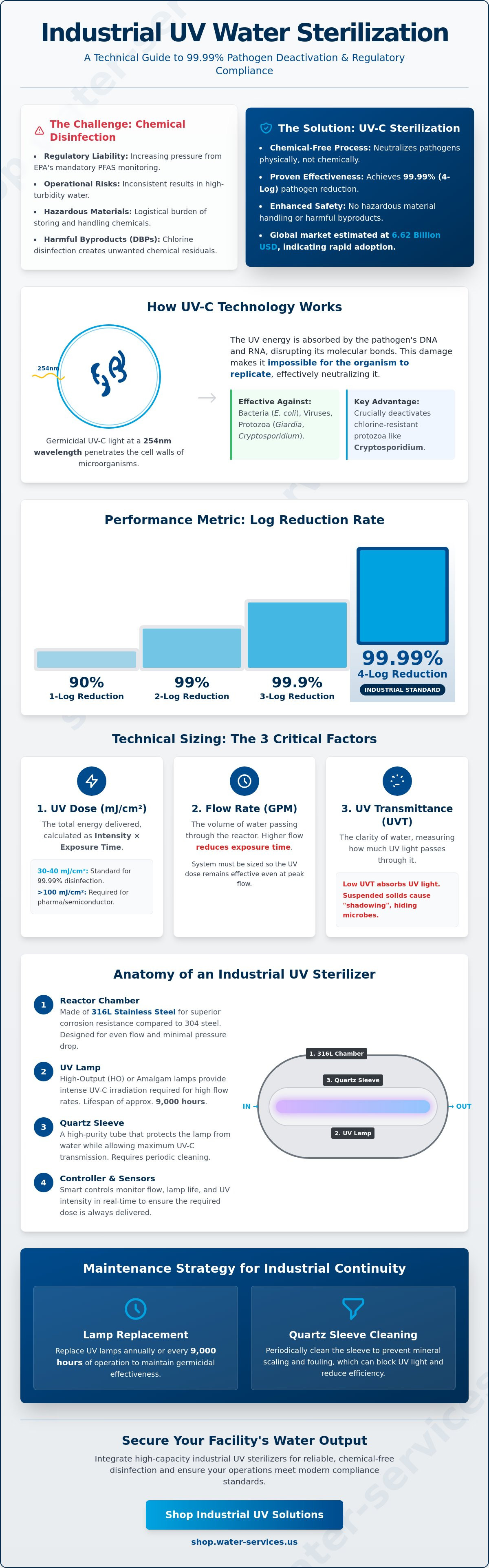
Industrial UV water sterilizers utilize electromagnetic energy at the 254nm wavelength to deactivate biological contaminants. This specific wavelength, known as UV-C, is the peak germicidal spectrum required for effective deactivation. Ultraviolet germicidal irradiation technology works by penetrating the cell walls of microorganisms. Once inside, the energy disrupts the molecular bonds of DNA and RNA. This damage prevents the organism from replicating; it's effectively neutralized without the use of heat or toxic additives. Because the process is physical rather than chemical, it doesn't alter the water's pH or mineral composition.
The primary advantage of UV over traditional methods like chlorine or ozone is the total lack of chemical residuals. Chlorine requires careful dosing, specialized storage, and creates harmful disinfection byproducts (DBPs). UV systems provide an immediate physical process that doesn't require handling hazardous bulk chemicals. For facilities utilizing water treatment antiscalants and chemicals in pre-filtration, UV serves as a clean final stage. It ensures a 4-log reduction, which represents a 99.99% pathogen deactivation rate. This standard is essential for meeting 2026 municipal and industrial safety compliance.
Key Components of Industrial UV Systems
A robust industrial system relies on a 316L stainless steel reactor chamber. This material offers superior corrosion resistance compared to 304 steel, making it the standard for high-purity applications. The chamber's hydraulic design ensures even UV exposure throughout the water column with minimal pressure drop. Inside, high-output (HO) or Amalgam lamps provide the necessary intensity for high-flow environments. These lamps are protected by a high-purity quartz sleeve. The sleeve acts as a thermal barrier and prevents water from contacting electrical components while allowing maximum UV-C transmission.
Log Reduction and Disinfection Targets
Performance in industrial UV water sterilizers is measured by log reduction. A 1-log reduction equals 90% deactivation, while a 4-log reduction achieves 99.99%. Industrial source water often contains pathogens like E. coli, Giardia, and Cryptosporidium. UV is particularly valuable because it's the preferred method for deactivating chlorine-resistant protozoa. While chlorine is often ineffective against Cryptosporidium at standard industrial doses, UV-C energy penetrates these hardy oocysts with high efficiency. This makes UV technology a critical component for facilities dealing with surface water or challenging groundwater sources.
Technical Sizing: Flow Rates, UV Dose, and Transmittance
Sizing industrial UV water sterilizers requires more than matching a pipe diameter. The core engineering principle is the relationship between flow rate, measured in Gallons Per Minute (GPM), and contact time. As the flow velocity increases, the duration pathogens spend within the germicidal "kill zone" of the reactor decreases. To compensate for high-velocity water, the system must deliver a specific UV Dose. This metric, expressed in millijoules per square centimeter (mJ/cm²), is the product of UV intensity and exposure time. If the flow rate exceeds the reactor's design capacity, the UV dose drops, potentially failing to meet safety standards.
UV Transmittance (UVT) is the most critical variable in determining system capacity. UVT measures the percentage of UV-C light that remains at a distance of 1 cm from the source after passing through the water. Water with low UVT—often caused by dissolved organics or tannins—absorbs the light before it can reach the outer edges of the reactor chamber. Furthermore, suspended solids cause "shadowing." This phenomenon occurs when microbes hide behind particulate matter, effectively shielding them from the UV-C energy. Without adequate pre-treatment, even the most powerful industrial UV water sterilizers cannot guarantee 4-log deactivation.
Calculating the Required UV Dose
For standard industrial disinfection, a baseline dose of 30 to 40 mJ/cm² is the benchmark for 99.99% pathogen reduction. However, pharmaceutical and semiconductor facilities often require high-intensity doses exceeding 100 mJ/cm² to ensure total TOC reduction or deactivation of resilient viral strains. Modern systems utilize Signet flow sensors and digital controllers to monitor GPM in real-time. These controllers automatically adjust lamp intensity or trigger shut-off valves if the flow rate exceeds the system's ability to maintain the target dose. To ensure consistent flow across your reactor, integrate high-efficiency Goulds Water Technology Pumps into your distribution loop.
Water Quality Parameters for UV Success
Successful sterilization depends on the clarity of the quartz sleeve. High levels of iron (over 0.3 ppm), manganese (over 0.05 ppm), or total hardness (over 120 ppm) cause rapid mineral scaling on the sleeve surface. This fouling blocks UV-C energy from entering the water column. A 5-micron sediment pre-filtration stage is the minimum requirement for most industrial applications. Implementing Industrial Water Filtration Systems before the UV stage is essential to prevent shadowing and protect the high-purity quartz from physical abrasion.
Industrial Selection Criteria: Materials and Control Systems
Selecting the right metallurgy is the first step in hardware specification. While 304 stainless steel is common in light commercial units, industrial UV water sterilizers require 316L stainless steel for process water or corrosive environments. The 316L alloy contains molybdenum, which provides critical resistance to pitting and crevice corrosion in high-chloride water. Chamber design also dictates hydraulic performance. Axial flow reactors align the water path with the lamp axis, minimizing turbulence and pressure drop. In contrast, cross-flow designs offer a smaller footprint but may introduce higher hydraulic resistance, which can impact the efficiency of your distribution pumps.
Power management is vital for 24/7 industrial operations. High-efficiency electronic ballasts must be used to drive Amalgam or high-output (HO) lamps without excessive heat generation. For 2026 compliance, ensure the hardware carries NSF/ANSI 61 certification for material safety and NSF/ANSI 55 Class A certification for validated performance. These standards guarantee the system delivers a minimum 40 mJ/cm² dose under varying conditions. Choosing certified equipment removes the guesswork from regulatory audits and ensures the reactor can handle the specific flow dynamics of your facility.
Advanced Monitoring and SCADA Integration
Real-time tracking is a requirement for modern facilities. UV intensity sensors provide a 4-20mA output for direct SCADA integration, allowing operators to monitor lamp aging and sleeve fouling from a central control room. For remote mining or military sites, dry contact signals provide immediate alerts for lamp failure or low UV intensity. If the source water has high mineral content, specify an automatic wiper system. These mechanical assemblies clean the quartz sleeve without system shutdown, maintaining peak transmittance and preventing the scaling issues discussed in previous sections.
Physical Footprint and Modular Installation
Modular installation allows for easier integration into containerized RO plants. Horizontal mounting is standard for high-flow reactors, while vertical mounting saves floor space in tight mechanical rooms. Inlet and outlet flange sizes must match the main header to prevent restricted flow and unnecessary backpressure. Proper Electric Power Controls are necessary to protect sensitive UV ballasts from voltage spikes and ensure long-term system stability. Matching these electrical components to the specific power requirements of the reactor prevents premature lamp failure and reduces overall maintenance costs.
Maintenance Strategy: Ensuring Industrial Continuity
Operational reliability for industrial UV water sterilizers depends on a disciplined preventative maintenance schedule. While these systems operate without the moving parts found in mechanical filtration, the consumables dictate the actual disinfection efficacy. High-output (HO) lamps generally require replacement every 9,000 to 12,000 hours of continuous operation. Beyond this interval, the lamp's ability to emit 254nm germicidal energy degrades significantly due to mercury solarization. Even if the lamp appears functional to the naked eye, the invisible UV-C output may no longer meet the 40 mJ/cm² dose required for safety compliance.
Quartz sleeve maintenance is the second pillar of industrial continuity. As noted in the discussion on water quality, mineral scaling, primarily from calcium and iron, creates a physical barrier between the lamp and the water column. Cleaning should occur during every lamp change or more frequently in high-fouling environments. Technicians must use Personal Protective Equipment (PPE), including UV-protective eyewear and nitrile gloves, when handling components. Skin oils left on the quartz or lamp glass can cause localized overheating, resulting in premature failure or sleeve cracking.
The Essential Maintenance Toolkit
Rapid servicing requires the right industrial instruments to prevent hardware damage. Use specialized wrenches to loosen and tighten compression nuts; using the wrong tool often leads to stripped threads or cracked quartz sleeves. Precision screwdrivers are necessary for making fine adjustments to ballast wiring and controller terminals. For facilities requiring high-grade maintenance instruments, the Hand Tools collection provides the professional-grade pliers and drivers needed for secure reactor assembly. Having these tools on-site reduces system downtime during scheduled lamp change-outs.
Troubleshooting Common System Alerts
A "Low UV Intensity" alarm is the most common alert in industrial environments. This usually points to one of two issues: lamp aging or sleeve fouling. If the lamp is within its 9,000-hour window, the sleeve likely needs a chemical descale. If the ballast fails or power surges occur, the system should be inspected for electrical damage. Always verify the success of your maintenance procedures with post-UV microbial sampling to confirm the 99.99% pathogen reduction. For reliable replacement parts and technical support, browse our industrial water treatment components to ensure your system remains within compliance parameters.
Selecting the Best Viqua and Industrial UV Solutions
Viqua UV Water Purification Systems are the industry benchmark for commercial and high-capacity applications. Their dominance in the market ensures that replacement components remain accessible globally; this is a critical factor for maintaining industrial uptime. When specifying industrial UV water sterilizers, the hardware must integrate seamlessly with other system components. For instance, pairing a Viqua reactor with Goulds Water Technology Pumps ensures that the water velocity remains within the designed contact time parameters discussed in previous sections. This synergy prevents the "short-circuiting" of the disinfection process that occurs when flow rates exceed the reactor's capacity.
UV technology is rarely a standalone solution. It functions most effectively as the final polishing stage within a comprehensive Industrial Water Treatment System. By combining UV sterilization with RO membranes and multimedia filtration, facilities can achieve high-purity water that meets 2026 safety standards. Water Services, Inc. specializes in these multi-stage, modular deployments, providing the technical expertise required for complex global installations. Our role as a curated authority ensures that every component, from the reactor chamber to the sensors, meets rigorous industrial standards.
Viqua Pro and K Series for High-Flow Applications
The Viqua Professional series, including the PRO10, PRO20, and high-flow models like the SHF-180, offers capacities ranging from 10 to 183 GPM. These units feature 'Cool-Touch' fan technology. This engineering detail protects the UV lamps by managing heat during periods of zero flow, preventing the water inside the chamber from reaching temperatures that could damage the quartz sleeve or cause mineral precipitation. For ongoing maintenance and to avoid system downtime, facility managers can source all necessary replacement lamps and high-purity sleeves at the Water Treatment store.
Final Procurement Checklist
Before finalizing a purchase, verify that the reactor's peak flow capacity aligns with your required UV Dose for specific pathogens. It's essential to confirm electrical compatibility, such as 110V or 220V requirements, and ensure that inlet/outlet flange sizes match your existing piping to avoid restricted flow. Finally, equip your technicians with the necessary instruments from the Hand Tools collection. Having the correct wrenches and precision drivers on hand ensures that lamp replacements and sleeve cleanings are performed without damaging the sensitive internal hardware of your industrial UV water sterilizers.
Optimizing Your 2026 Water Disinfection Strategy
Securing industrial water safety requires a precise alignment of technical sizing, material selection, and rigorous maintenance. You've seen how UV Transmittance and flow rates dictate the efficacy of industrial UV water sterilizers in achieving 4-log pathogen deactivation. By implementing Viqua certified equipment and adhering to 9,000-hour lamp replacement cycles, your facility can maintain compliance without the risks associated with chemical handling. Water Services, Inc. has provided specialized engineering for mining and military sectors since 1994; we leverage a global logistical reach to support complex installations.
Success in high-flow environments depends on having the right hardware and the right instruments for the job. Effective servicing prevents the mineral scaling and lamp failure that lead to system downtime. To maintain your reactor's integrity and ensure long-term operational continuity, equip your facility with professional-grade instruments from our Hand Tools collection. Taking these steps now ensures your water treatment infrastructure remains resilient and efficient for years to come.
Frequently Asked Questions
What is the difference between a UV sterilizer and a UV purifier?
The terms are often used interchangeably, but "sterilizer" typically refers to systems designed for a 99.99% deactivation rate of all microorganisms. In industrial contexts, a sterilizer ensures that no pathogens can replicate. A purifier is a broader category that might include filtration or chemical stages. For high-capacity safety, industrial UV water sterilizers provide the specific germicidal intensity required to meet rigorous 4-log reduction standards.
How often do industrial UV lamps actually need to be replaced?
Industrial lamps require replacement every 9,000 to 12,000 hours of continuous operation. This schedule is necessary because the 254nm germicidal output degrades over time; even if the lamp still glows, it's no longer delivering the validated dose. Waiting for a lamp to burn out is a compliance risk. Adhering to this cycle ensures the system consistently meets NSF/ANSI 55 Class A requirements for pathogen deactivation.
Can UV sterilization remove chemicals or heavy metals from water?
No, UV technology is exclusively a biological deactivation process. It doesn't remove lead, arsenic, PFAS, or other dissolved chemicals. To address chemical contaminants or heavy metals, you must integrate reverse osmosis membranes or specialized media filters into your treatment train. UV serves as the final disinfection stage after these physical and chemical removal processes are completed in a multi-stage system.
What happens if the water flow exceeds the rated GPM of the UV system?
Excessive flow reduces the contact time within the reactor chamber, which lowers the overall UV dose delivered to the water. This often results in incomplete disinfection and failure to meet safety standards. Most industrial UV water sterilizers utilize flow restrictors or integrated controllers to manage velocity. If your facility's demand increases, you must upgrade the reactor size to maintain the required millijoule intensity.
Do I need a pre-filter before my industrial UV sterilizer?
Yes, a 5-micron pre-filter is a technical requirement for nearly all industrial installations. It prevents "shadowing," where pathogens hide behind suspended solids to avoid UV-C exposure. Effective pre-filtration also reduces mineral scaling on the quartz sleeve. Without this stage, the system's ability to penetrate the water column is compromised, leading to inconsistent disinfection results and increased maintenance frequency for the reactor hardware.
Is UV sterilization effective against Giardia and Cryptosporidium?
Yes, UV is the preferred method for deactivating these specific chlorine-resistant protozoa. While standard chemical doses often fail to penetrate the thick walls of Cryptosporidium oocysts, UV-C energy at 254nm disrupts their DNA immediately. This physical process makes UV an essential safety layer for any facility utilizing surface water or groundwater sources that are vulnerable to biological contamination from runoff.
How do I calculate the UV Transmittance (UVT) of my source water?
UVT is determined using a spectrophotometer set to the 254nm wavelength. The test measures the percentage of light that passes through a 1 cm sample of water compared to a distilled water control. This metric is vital for sizing industrial UV water sterilizers; lower UVT percentages indicate higher absorption by dissolved organics. Accurate UVT data ensures you don't undersize the lamps for the specific clarity of your source water.
Yes, UV systems are a standard solution for potable water in remote military and mining environments. They provide high-level disinfection without the logistical burden of transporting, storing, and dosing hazardous chlorine. When integrated into a modular or containerized plant, UV systems deliver reliable safety with low operational overhead. They're particularly effective in these settings because they don't produce disinfection byproducts or alter the water's taste. Maintaining these standards of purity is also essential for protecting the natural habitats that support outdoor recreation, allowing enthusiasts to explore Lake Guntersville Fishing Trips and experience the health of our freshwater systems with Bass Online.
Yes, UV systems are a standard solution for potable water in remote military and mining environments. They provide high-level disinfection without the logistical burden of transporting, storing, and dosing hazardous chlorine. When integrated into a modular or containerized plant, UV systems deliver reliable safety with low operational overhead. They're particularly effective in these settings because they don't produce disinfection byproducts or alter the water's taste.
0 comments